Timing Charts: A Blueprint For SMIL Animations
Discover SMIL, the often-overlooked way to animate SVGs that works inside `` tags and can fully animate everything in an SVG without JavaScript.
Curated articles from sources across the web
Discover SMIL, the often-overlooked way to animate SVGs that works inside `` tags and can fully animate everything in an SVG without JavaScript.
New EU guidelines, why AI sparkles aren’t enough, when AI labels are required, and what the rules mean for AI-powered features and products. Brought to you by Design Patterns For AI Interfaces, **friendly video courses on UX** and design patterns by Vitaly.
When tasked with building a highly interactive, tactile web experience, the architecture must serve the art direction. In this article, Alexey Kopytin explains their architectural rationale for building a digital stress-relief squeeze toy game using Lottie animations, DOM events, and distance-based...
The gap between “you need a library for this” and “the browser does this” keeps closing. A practical guide to auditing your dependencies and finding what the web platform can now handle for you.
Whether you’re enjoying some well-earned time off this August or are jumping headfirst into a new project, how about some new desktop wallpapers to accompany you on all those big and small adventures the month might bring? Well, we’ve got you covered!
As AI reshapes product design, it could give designers greater autonomy or expose the gaps that autonomy makes harder to hide. Exploring both the bull and bear cases, Andy Budd examines what happens when designers need less permission to act.
Many of the AI tools we interact with take the form of text boxes. But what if there was a different way to interact with AI? Oleksii Hrzhehorzhevskyi explores a different approach to creating a new AI assistant and how designers can navigate the field as AI continues to change it.
While React Server Components rely on the custom Flight protocol to stream interactive UIs, this same mechanism introduces powerful deserialization sinks that attackers can exploit. Durgesh Pawar breaks down the mechanics behind the CVSS 10.0 “React2Shell” vulnerability to show how protocol manipula...
The common rule of thumb is to never “block” the browser’s main thread when running JavaScript tasks. But is this a hard rule? Victor Ayomipo describes a use case he encountered involving a screenshot extension where he made an exception to the rule and decided that blocking the main thread was abso...
Many companies assume everyone craves new AI features. But the reality is that most people don't want more AI — at least not in the way most AI leaders envision it. Brought to you by Design Patterns For AI Interfaces, **friendly video courses on UX** and design patterns by Vitaly.
The strongest visual concepts don’t start in Figma. They start with the right questions. Explore the pre-concept phase of brand identity design, where teams research brand context, uncover hidden assumptions with stakeholders, and turn shared direction into a visual foundation before a single concep...
Many UI trends are designed to capture attention and signal innovation, but those goals often conflict with the needs of mental health apps: reducing cognitive strain, fostering trust, and providing a sense of refuge. Kat Homan introduces an evaluation framework that helps designers assess whether t...
We have been building websites inside boxes for years on WordPress. Let’s take a closer look at [Kirki](https://kirki.com/), the first freeform visual builder with an infinite canvas, and explore how it redefines the experience with cleaner performance, full design freedom, and zero plugin dependenc...
A closer look at why users don’t need more tools in their daily lives. What they need are seamless integrations of useful features to match already existing, established mental models. Brought to you by Design Patterns For AI Interfaces, **friendly video course on UX** and design patterns by Vitaly.
We’ve fallen into conversational tunnel vision, defaulting every AI capability into a chat-based interface simply because LLMs are trained on dialogue data. But great UX is about matching modality to users’ context, intent, and cognitive load, so the interface adapts to the user, not the other way a...
Teams can generate UI faster than ever, but they still have to guarantee that what they ship is usable, secure, and maintainable. Accessibility as an operational capability rather than a compliance checklist or end-of-project audit, and what that looks like in practice.
July is just around the corner, and that means... It’s time for some new desktop wallpapers! As every month, the wallpapers in this collection were created by the community for the community and can be downloaded for free. Enjoy!
In a world where AI is informing more design choices, it’s easy to mistake predictions for certainties. This article introduces Probabilistic Design, a mindset that allows UX and product teams to accept uncertainty, decipher AI outputs with nuance, and make smart, adaptive decisions.
We have officially moved past the era of humanoid robots as mere public relations stunts. As they become increasingly lifelike, society may soon face profound social, psychological, and ethical challenges. What happens when the boundary between humans and machines becomes almost impossible to distin...
Findings from an exploratory user research study highlighting the unique insights and practical UX recommendations shared by participants with cognitive disabilities.
Practical guide on how to reduce drifts, minimize mistakes, maintain context, and improve the quality of AI-generated prototypes. Brought to you by Design Patterns For AI Interfaces, **friendly video course on UX** and design patterns by Vitaly.
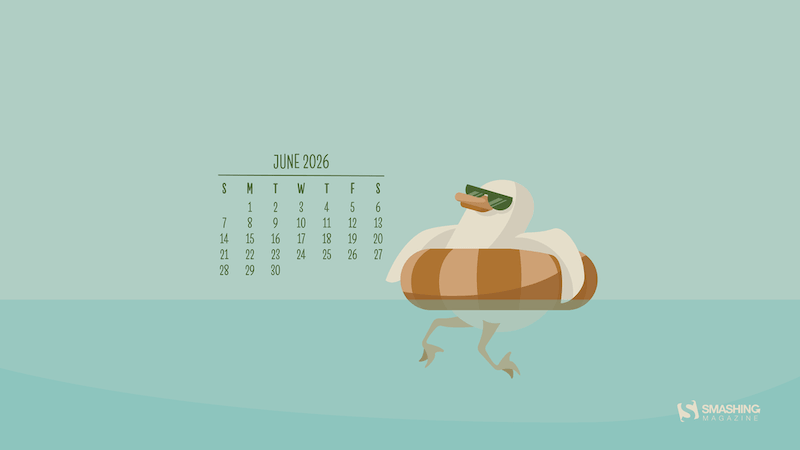
Let’s kick off June — and the beginning of summer — with some fresh inspiration! Artists and designers from across the globe once again tickled their creativity to welcome the new month with a new collection of desktop wallpapers. Enjoy!
Seventy percent of websites still fail basic WCAG contrast checks in 2025. After years of design system tooling, accessibility linters, and JavaScript libraries, nothing moved the needle. We didn’t need better libraries. We needed better CSS. `contrast-color()` is that better CSS.
There’s a moment in almost every usability session where a participant pauses at the login screen, types something, and glances up: checking whether they’re “doing it right.” That pause is a clear sign. They’ve already clocked that this isn’t a real app, and every data point collected after that mom...