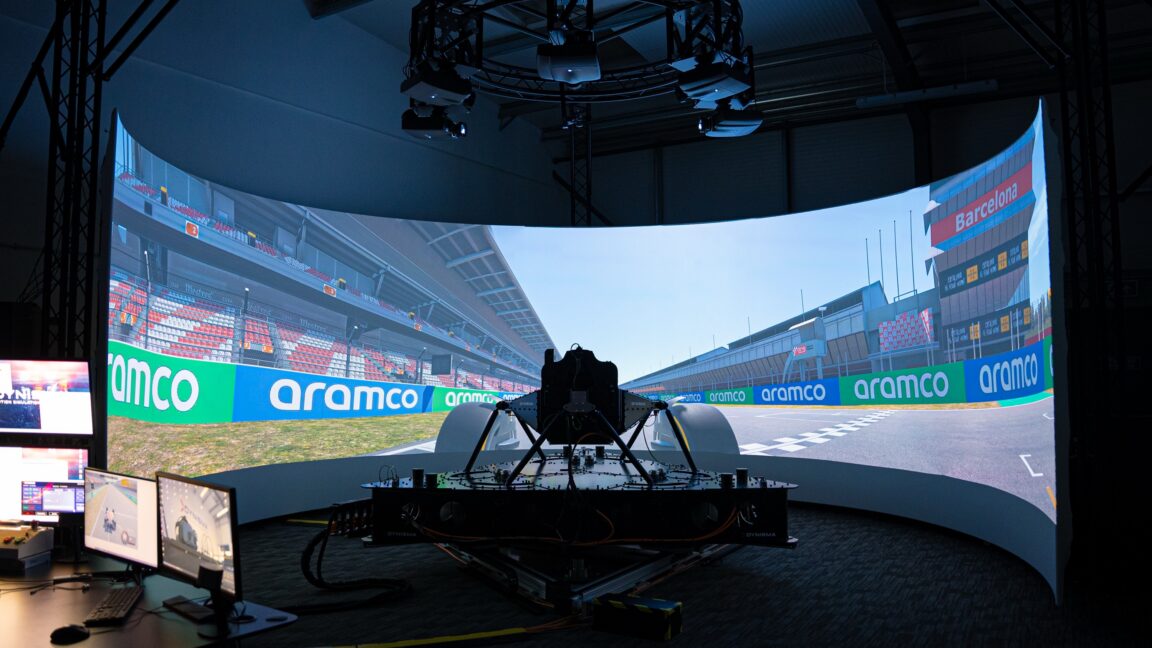
Among the ways Formula 1 has changed in the 21st century has been its adoption of driver-in-the-loop simulators. It all started in the early 2000s, probably at McLaren, maybe at Toyota or Ferrari; F1 teams are notoriously secretive about their performance advantages. Along the years, they've gotten more and more capable, but so too have high-end consumer sims like the multi-axis setups that cost tens of thousands of dollars. What is it that makes the multimillion-dollar simulators used in F1 that much more expensive, and that much better for the job?
For one thing, latency.
"There's this intimate link between the inputs that [a driver] provides to the car, the way the car responds, and then the driver immediately feels that and reacts to it. So this is a very dynamic closed loop involving the driver and the car," explained Ash Warne, founder and CTO of Dynisma Motion Generators, a UK-based simulator company that supplies Ferrari, Alpine, and soon Cadillac with DiL simulators that can cost as much as $10 million.
This article was originally published by Ars Technica and written by Jonathan M. Gitlin .
Read original article on Ars Technica