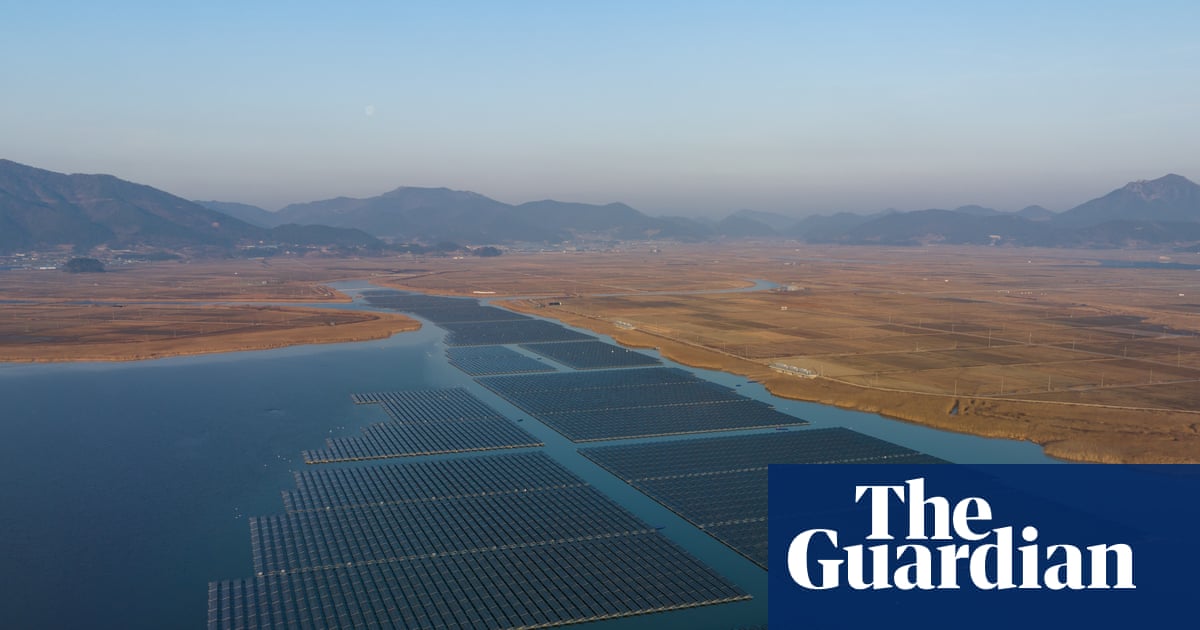
Energy crisis unfolding in Middle East has added political urgency, and more funding, to transform South Korea’s solar industry
In Guyang-ri, a farming village of 70 households about 90 minutes south-east of Seoul, people gather for communal free lunches six days a week. The meals are funded by the village’s one-megawatt solar installation, which generates roughly 10m won ($6,800) in net profit each month.
“Residents eat lunch together every day, so we see each other’s faces, talk together,” says Jeon Joo-young, the village chief. “Bonds and solidarity between residents become much stronger. Life becomes more enjoyable.”
Continue reading...This article was originally published by The Guardian and written by Raphael Rashid in Seoul.
Read original article on The Guardian